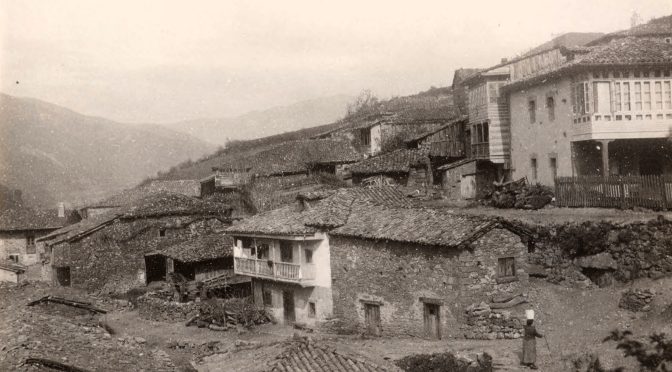
ALEXANDER WETMORE EN EL PUERTO DE PAYARES (1930)
Observaciones del paisaje natural y cultural de la Cordillera Cantábrica
David Ordóñez Castañón
Dr. Arquitecto. Universidad de Sevilla
Texto completo: ORDÓÑEZ CASTAÑÓN, David – Alexander Wetmore en el Puerto de Payares (1930)
Palabras clave: Alexander Wetmore, Institución Smithsonian, Puerto Payares, paisaje, ornitología
Keywords: Alexander Wetmore, Smithsonian Institution, Payares Pass, landscape, ornithology
Resumen:
En 1930, el naturalista estadounidense Alexander Wetmore (1886–1978), que sería Secretario de la Institución Smithsonian entre 1945 y 1952, viajó por el norte de España para estudiar la avifauna de la Cordillera Cantábrica. Sus fotografías y detalladas notas de campo revelan también un interés por el paisaje, el manejo tradicional del territorio, las costumbres locales y la arquitectura popular. El artículo repasa su recorrido por Fierros, Parana, el Alto Payares, Busdongo y Riaño. El análisis de sus cuadernos de campo y álbumes fotográficos permite apreciar el valor de estos materiales para la ornitología, pero también como testimonio del natural y cultural de la montaña asturleonesa en los años treinta del siglo XX, vista por un científico extranjero. El estudio recupera abundante documentación inédita, entre ella el manuscrito «A través de la Cordillera Cantábrica en el norte de España», probablemente elaborado para publicarse en National Geographic, y que se traduce y reproduce íntegramente en este artículo.
Abstract:
In 1930, the American naturalist Alexander Wetmore (1886–1978), Secretary of the Smithsonian Institution between 1945 and 1952, travelled through northern Spain to study the avifauna of the Cantabrian Mountains. His photographs and detailed field notes also reveal a broader interest in the landscape, traditional land use, local customs, and vernacular architecture. This article traces his journey through Fierros, Parana, Alto de Payares, Busdongo and Riaño. The analysis of his field notebooks and photographic albums highlights the value of these materials not only for ornithology but also as a natural and cultural portrait of the Asturian-Leonese mountains in the thirties of the twentieth century, seen by a foreign scientist. The study presents previously unpublished documentation, including the manuscript «Through the Cantabrian Mountains of Northern Spain», probably prepared for publication in National Geographic, here translated and reproduced in full.
 Asociación VINDONNUS